Home News 
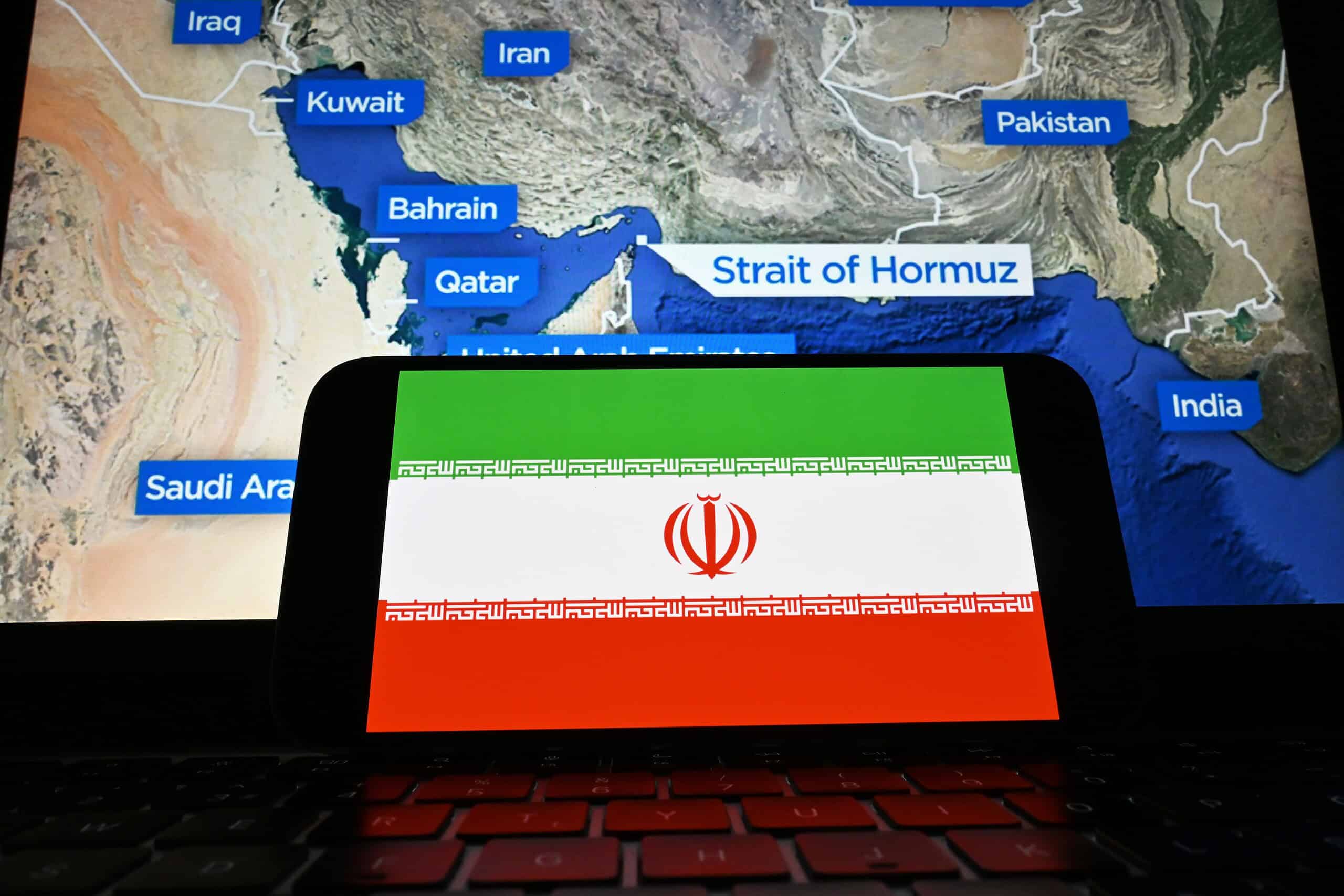
US strikes on Iran are increasing tensions in the Strait of Hormuz, increasing energy prices, disrupting trade and increasing the country’s vulnerability.
Commercial trade within the Strait of Hormuz has come to a near standstill as oil tankers and other shipping remain vulnerable to attack and are virtually unassailable, raising fears that the US-Israel war against Iran is turning into a global conflict with major economic consequences.
Global energy prices, in particular, are a key point of focus as the Strait serves as an important maritime artery for nearly 20% of the world’s oil flows – 70% of that oil goes to China, South Korea, India, and Japan.
Meanwhile, President Donald Trump’s disagreement with EU leaders over the use of certain military bases is making the already contentious situation worse.
Chokepoint Under Fire
Iran wants the Revolutionary Guards to take full control of the situation after a few days led by the US killed the supreme leader of Iran, Ayatollah Ali Khamenei. The UK Maritime Trade Operations Center is actively documenting numerous ship attacks and electronic interference affecting navigation in and around the Gulf.
A boat carrying bombs rammed a vessel flagged off the Marshall Islands in the Gulf of Oman, killing at least one sailor, according to the Wall Street Journal, citing Omani authorities.
The economic shock was immediate. West Texas Intermediate crude experienced its biggest two-day rally since March 2022. European natural gas prices nearly doubled in 48 hours. The biggest crisis came after QatarEnergy halted production of liquefied natural gas following attacks on its facilities, sending European gas prices up more than 40%. United States Oil Fund LP has gained more than 15% over the past five days.
Analysts also disagree on whether a complete Iranian blockade will happen.
Insurance Vanishes, Shipping
“The strong military blockade by Iran is completely preventing ships from passing through,” said Morningstar Equity Director Joshua Aguilar. However, commercial reality may have the same effect.
“The ships may not pass because there is no insurance company willing to pay for them,” added Aguilar
Joint insurers such as the London P&I Club, NorthStandard, UK P&I Club and Noord Nederlandsche P&I Club provide vessels that navigate in dynamic areas. If that coverage drops, shipping companies face unregulated exposure — a trade freeze that works even without a legal ban.
In response, Trump said in his Truth Social forum that he ordered the US International Development Finance Corporation to provide political risk insurance and guarantees of “financial security for all sea trade, especially energy, going through the Gulf.” He also said that the US Navy will accompany the tanks in the Strait.
BIMCO’s Chief Safety and Security Officer, Jakob Larsen, weighed in on the reasoning behind Trump’s plan. Indeed, escorting ships will reduce the danger ships are currently facing.
“That said, providing protection for all tanks operating in areas threatened by Iran is unreasonable,” he said. “This will require a very high number of warships and other military assets.”
CaixaBank, in a research note on Wednesday, issued its own warnings about the attack on Iran and the closure of the Strait of Hormuz. Energy prices will rise as long as the disruption continues, the company predicts.
“Iran’s response – increasing the scope of the conflict, effectively blocking shipping in Hormuz, and threatening critical infrastructure – is causing a temporary increase in tensions,” the company said. “It remains to be seen how many days this response can be sustained and what path the new leadership (and, especially, Khamenei’s successor) will take.”
Continued high prices may trigger moves by the European Central Bank and the Federal Reserve, increasing economic drag, the company continued.
Transatlantic Talks Are Changing Times
The naval unrest occurred along with a major breakdown in communications with Europe. Trump on Tuesday threatened to “cut off all trade with Spain” after Madrid denied US access to its military bases. He also criticized the UK’s decision to block the use of Diego Garcia in the Indian Ocean.
“This is not the era of Churchill,” Trump said during a White House meeting with his European counterparts. “The UK has been very uncooperative with this stupid island they have.”
The comments underscore growing tensions within NATO and the broader Western alliance at a time when concerted action will be critical to stabilizing markets. Instead, the gap adds another layer of uncertainty to a global trade that has been plagued by inflation and cost confusion on the heels of the US Supreme Court’s ruling against Trump.
A number of joint ventures are also on hold, marking a significant difference from 2025, the second largest year on record for transaction value.
“The feeling was that the stars were aligned” for the same route in 2026, said Kyle Walters, an analyst at PitchBook.
M&A consultancies such as McKinsey & Company and Bain & Co. had projected sustainable growth in M&A through 2026 due to key factors of energy security, firefighting of the treasury fund, and supportive financial reforms.
Then one weekend the narrative changed. As Walters puts it: “Uncertainty is bad for M&A appetite.”
Price uncertainty can delay deals. Inflation makes financing difficult. Armed conflict at the center of the world’s energy flows is seriously destabilizing.
“In times of uncertainty, buyers pull back. They’re in a wait-and-see mode,” Walters said, adding that domestic M&A has been “turned on its head.” Cross-border activity is particularly exposed, with capital flight, financial volatility, and political risk creating a “useless M&A environment.” European firms considering expansion into the Middle East are now facing intense scrutiny; “It has to be an A+ to keep going,” Walters said.
Markets Are Going Up
What started the year as a matter of alignment and acceleration has turned into one of realignment – with financial stability just as country risks grow.
BMI, a unit of Fitch Solutions, described a short-term scenario in which the US is coordinating with Israel to defeat Iran and minimize retaliation against US assets and the Strait itself.
But even a limited campaign has economic consequences.
Abigail Hall, chief executive at the Independent Institute, warned that energy markets are likely to struggle. “There are already concerns about shipping and other disruptions – especially around the Strait of Hormuz,” he said, pointing to “information issues on the part of policymakers and the existence of improper incentives.”
Hall also expressed skepticism that the US-led strikes would create long-term political change inside Iran. “He may have ‘cut off the snake’s head,’ but he ignored the fact that there were many other snakes in the room,” he said.
He explained that military strikes tend to empower the most dangerous groups in the country and produce “flag-circling” effects where foreign attacks draw civilians into the existing regime.
“In Iran we have seen an increase in the military, and domestic resistance is encouraging,” he adds. “It often leads to stronger repression and increased state control.”