Trump’s China trip has been thrown into doubt by the Iran war, but Beijing doesn’t seem to mind waiting

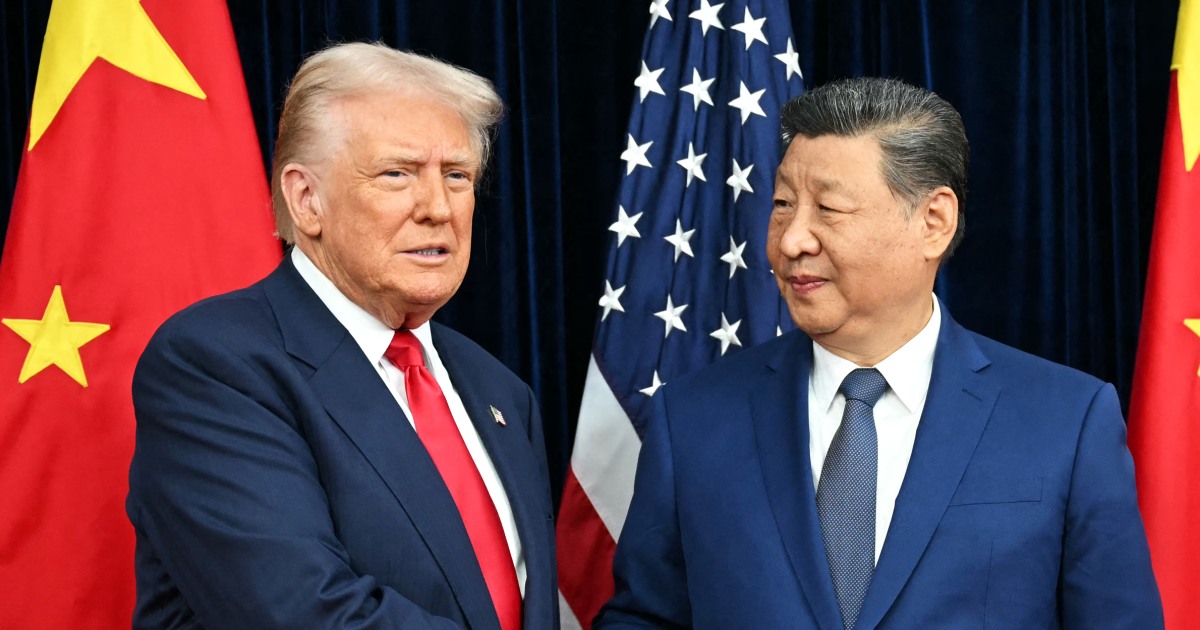
BEIJING – The timing of a much-anticipated summit between President Donald Trump and Chinese leader Xi Jinping is in doubt after Trump asked to delay it for “a month or so” so he can focus on the escalating war with Iran.
It is the latest issue arising from the US-Israeli attack on Tehran, which has close ties with Beijing, as the conflict adds another point of tension between the US and China.
The summit was intended to focus on trade, as both Trump and Xi seek to extend a critical tariff agreement between the world’s two largest economies. But China has shown little sign of concern over a possible delay, which analysts say could prove beneficial in efforts to further stabilize relations.
Trump said on Monday that his planned trip to China for the end of this month could be postponed because of the war, telling reporters in Washington, “I think it’s important that I be here.” But his administration has not confirmed whether the trip has been delayed or shared exact dates on when it will be postponed.
Beijing did little to clarify the situation on Tuesday, with China’s Foreign Ministry saying it had “no further information at this time.”
“China and the United States continue to communicate about the timing of President Trump’s visit to China and other related issues,” ministry spokesman Lin Jian told reporters at a regular news conference in Beijing, repeating the line from yesterday.
The White House had said that Trump would be gone from March 31 to April 2. China has not yet confirmed the dates.

As shipping and energy prices are boosted by Iran’s effective closure of the critical Strait of Hormuz, Trump has been trying to gain naval support from countries that import oil and gas through the waterway. On Sunday, he told the Financial Times he would “like to know” that China would help and suggested he could postpone the trip.
Treasury Secretary Scott Bessent wants to clarify that postponing the trip “will not be compatible with the Chinese commitment to the Strait of Hormuz.” Trump later said there were “no tricks” and that he was looking forward to the trip.
China also says the visit is unrelated to the strait and without being affected by uncertainty about Trump’s plans.
Instead of being upset by the possible delay, China “may be a little more relaxed,” said Dominic Chiu, senior analyst of US-China relations at Eurasia Group.
“From what I understand, preparations for Trump’s state visit are going well,” he told NBC News in an interview.

Even before the US-Israel war with Iran began on Feb. 28, it is reported that “there is a lack of communication on the part of the White House to reveal concrete deliverables, to gather a business team that may accompany Trump in China,” said Chiu.
If the conference is delayed, “that gives both sides more time to talk,” he said.
Neil Thomas, a fellow at the Asia Society Policy Institute’s Center for China Analysis, agreed.
“From China’s point of view, there has been a lot of concern in Beijing about the lack of preparation on the American side for the summit so that Chinese policymakers don’t care about a few weeks to prepare for a very important visit,” he told Reuters.
“Trump is preoccupied with the Iran war that has not been resolved as quickly as predicted,” said Thomas, “which means that planning a successful visit to Beijing is almost impossible.”
Although the latest round of US-China trade talks appeared to be going well, they ended on Monday in Paris without public announcements. Expectations for the Trump-Xi summit, which comes after years of turmoil in US-China relations, have been low.
“I think good deals are becoming more and more unlikely,” Chiu said.
Instead, he said, the US and China will focus on the “low-hanging fruits” they can offer each other, such as Chinese promises to buy more US agricultural products and energy, or to continue cracking down on the international flow of fentanyl ingredients.
With many of Trump’s tariffs around the world recently overturned by the US Supreme Court, Beijing also sees the summit as an opportunity to negotiate lower tariffs, Chiu said.
Although Beijing has publicly criticized the new Section 301 trade investigation the Trump administration has opened against China and other countries as they try to reverse those tariffs, they appear to be “manageable irritants,” he said.

And while China is concerned about oil and gas supplies through the Strait of Hormuz, “I don’t think they’re folding their hands,” Chiu said.
Although Trump said on Monday that China – the world’s largest oil importer – gets more than 90% of its oil through the crisis, experts put the figure at around half. China is also a major producer of oil and gas itself and has been building up its oil reserves.
Some of its oil is also still passing through the route, said Tim Huxley, managing director of Mandarin Shipping in Hong Kong. But no matter how secure its energy supply is, China would still like an end to the blockade.
“China has had enough for the next few months,” Huxley said. “But the longer this goes on, the more difficult it becomes.”
Janis Mackey Frayer reported from Beijing, and Jennifer Jett from Hong Kong.