By Chloe Mari A. Hufana, A reporter
Philippine President Ferdinand R. Marcos, Jr. declared a national emergency on Tuesday, giving the government expanded powers to protect fuel and protect the economy from rising oil prices caused by a war involving Iran, Israel and the US.
In Executive Order No. 110, Mr. Marcos said the escalation of conflicts in the Middle East and disruption of critical shipping lanes such as the Strait of Hormuz is an “imminent threat” to the country’s energy security, underscoring the vulnerability of the Philippines as a major exporter of petroleum products.
The directive activates an integrated response framework known as UPLIFT or the Integrated Package for Livelihoods, Industry, Food and Transport, which aims to stabilize fuel supplies, stabilize economic activity and protect sectors most vulnerable to rising energy costs.
Global oil prices have risen since the conflict erupted in late February, raising the risk of inflation in the Philippines, where fuel costs directly affect fares, food prices and electricity prices.
The move comes as Malacañang maintains that the country is not facing an immediate fuel shortage, citing stable inventories and diversification of supply sources.
The palace said the government is negotiating with other suppliers including China, Russia, Japan, South Korea, Brunei and India to reduce dependence on Middle Eastern oil. Mr. Marcos previously said talks with these countries have been “good,” although no supply agreements have been announced.
Under the executive order, the Department of Energy (DoE) may take emergency measures such as direct purchase of petroleum products and close cooperation with state-owned companies, including the Philippine National Oil Co. The authorities are also empowered to tighten fuel price surveillance and curb hoarding, profiteering and market manipulation.
The government will prioritize the allocation of fuel to key sectors including public transport, healthcare, power generation and utilities.
Approval of energy projects will be fast-tracked to increase domestic production capacity, while government offices will implement strict conservation measures, including a four-day work week to curb energy consumption.
Short-term relief measures include fuel subsidies for transport operators and drivers, support for passenger fares, expansion of public transport services and targeted assistance to households and industries most vulnerable to fuel costs.
The directive also outlines long-term measures to reduce dependence on imported oil, including accelerating the development of renewable energy, increasing the use of electric vehicles in mass transportation and promoting electric energy use in all sectors.
The Cabinet-level committee led by Mr. Marcos will oversee the implementation, bringing together officials from the economic, transport, agricultural and social institutions to coordinate interventions on the side of supply and targeted assistance.
As the war with Iran approaches its one-month mark, the Philippines is relying heavily on fuel and financing to cushion the impact on consumers.
The President asked Congress to grant him emergency powers to stop or reduce the tax on fuel products, although he has not yet signed the proposed measure and cited complex financial calculations.
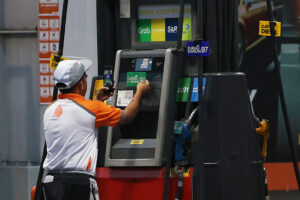
Gasoline prices rose again this week, extending one of the longest rising streaks in recent years. Some oil companies raised the price of diesel by about P18 per liter and gasoline by P8, while government estimates indicated that it will increase to P11.88 for diesel, P6.47 for gasoline and P13.66 for kerosene.
In Metro Manila, pump prices may increase to P126.78 per liter of diesel, P98.07 for gasoline and P157.45 for kerosene, marking the 13th weekly increase for diesel and kerosene respectively and the 11th for gasoline.