For a surgeon who treats injured Lebanese children, their horrific injuries remind him of Gaza

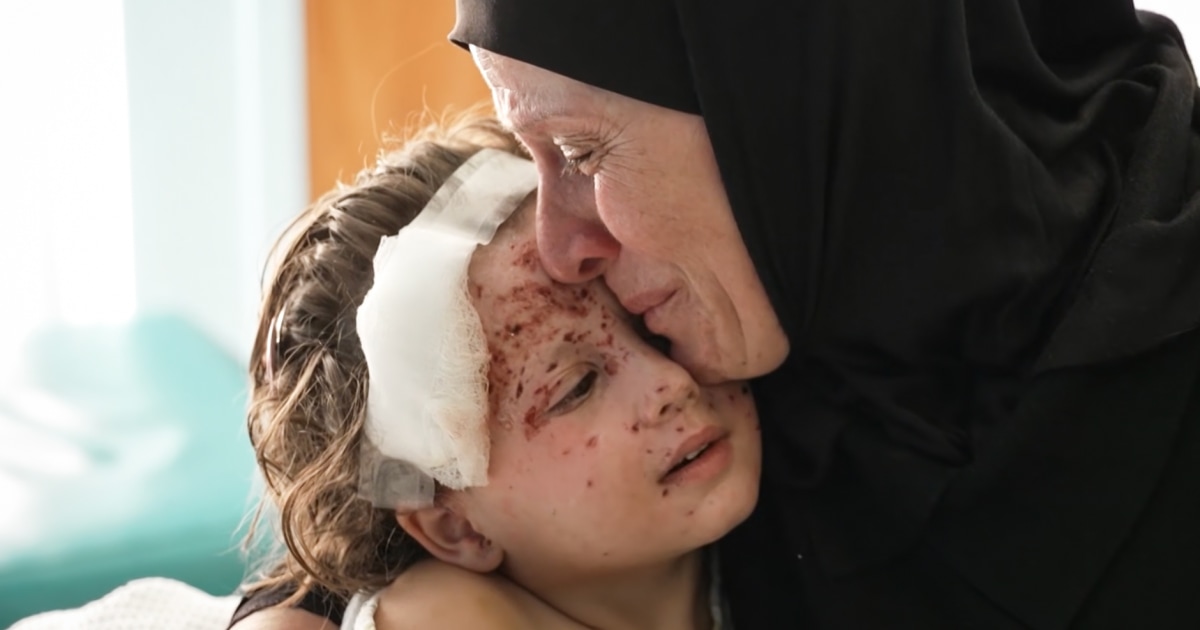
BEIRUT — For a British Palestinian surgeon, Dr. Ghassan Abu Sittah and his colleagues at the American University of Beirut Medical Center, these wounds in children are very common.
The number of children injured is rising from Israeli strikes across Lebanon, targeting the Iran-backed militant group Hezbollah, after military operations resumed as the United States and Israel began their war against Iran and its proxies in the Middle East.
At least 687 people, including 98 children, have been killed between March 2 and 12, Lebanon’s Ministry of Health said on Thursday.
Abu Sittah told NBC News on Tuesday that he treats patients in the children’s ward “with blast injuries, explosives, debris, serious injuries.”
The other boy was “a throwback to my time in Gaza, when he was the only survivor of his family,” said Abu Sittah, who volunteered with Doctors Without Borders during Israel’s war with Hamas and has worked in the Palestinian territories since the late 1980s. He has also worked in other conflict zones, including Iraq, Syria and Yemen.
Israel has been carrying out frequent attacks in southern Lebanon since reaching a US-brokered ceasefire deal with Hezbollah in November 2024, arguing that the Tehran-backed militant group is trying to rebuild its power. But Israel stepped up its military campaign after Hezbollah fired rockets and drones at its northern border in retaliation for the assassination of Iran’s Supreme Leader Ayatollah Ali Khamenei.
As well as raiding the Lebanese territory, Israel has launched strikes across the country, focusing its strikes in southern Lebanon and areas south of Beirut where it has ordered the evacuation of many people from all neighbourhoods. More than 750,000 people in the country of about 6 million have been displaced, according to Lebanese government figures released this week, sparking a humanitarian crisis.

Abu Sittah said he was operating on two of the four sisters who received “terrible injuries” in the strike near their home in eastern Lebanon, Bekka Valley. Some of their bones were broken and their ears were blown off in the blast, he added.
“One was killed suddenly and three ended up being kept in the intensive care unit,” he said, adding that they were hoping to find a bed for the third girl, so that they could move her to a small rural hospital close to home.
Abu Sittah said that it is ironic that their treatment is “less expensive than the weapon that caused all this,” and although it seems difficult to get money for such military equipment, “we have to fight continuously” to get money to treat children.
The surgeon, who in April 2024 founded the Ghassan Abu Sittah Children’s Fund to raise money for medical treatment, said his experience in Gaza changed him forever. “If you’ve experienced a flood, that doesn’t prepare you for a tsunami.
“The huge number of children killed in Gaza, almost 30,000, has shocked the whole world and made it accustomed to the idea that children can be killed on such a scale,” he said.

Like many of Abu Sittah’s patients, 6-year-old Omar was transferred to the Beirut hospital from Gaza after sustaining severe wounds in the December 2023 Israeli strike that killed his entire family in the Nuiserat refugee camp in central Gaza.
Badly injured, the little boy lost his left arm and was fitted with a prosthetic device. He said he wants to become a doctor to help the people of Gaza like those who helped him.
Although Abu Sittah shows nothing but compassion for his patients like Omar, he said it was anger at their plight that kept him going.
“Anger is what protects your personality,” he said. “If these things become normal to you, then you have lost something very important. You need to be angry all the time.”