WASHINGTON – Despite being weakened and facing a domestic crisis, the Iranian regime still has significant power that could harm US interests and allies in the region, disrupt the global economy and trigger a protracted conflict in response to US military strikes, according to former US officials, foreign diplomats and regional analysts.
The prospect of Iranian retaliation has factored into President Donald Trump’s discussions about whether to order military strikes on Iran following strikes on its nuclear program in June, as well as talks between the US and its Middle East allies, according to current US officials.
When Iran retaliated in June against Israel and the American base in Qatar, it stopped doing surprising things that could cause casualties among American soldiers or destroy the economy of the Persian Gulf. Iran’s response to a US military move could play out very differently this time if Trump makes that decision, former officials, diplomats and analysts say, especially if Iran’s leaders see a threat to their survival.
“What might be different this time is that they’re trying to regionalize this, instead of going after Israel or going after American bases,” said Joseph Votel, a retired four-star Army general who oversaw US forces in the Middle East during Trump’s first term.
Votel, now the head of the Middle East Institute, a think tank, said one possibility is that Iran will try to target oil refineries in the Persian Gulf states in an effort to “draw everybody into this and make this a protracted conflict.”
The US and Iran are expected to hold another round of diplomatic talks as soon as Thursday, according to administration officials. Administration officials have indicated that Iran must make major concessions on its nuclear program, including halting uranium enrichment, to avoid US military action.
Trump’s ambassador to the Middle East, Steve Witkoff, who leads the Iran negotiations and Trump’s son-in-law Jared Kushner, said at the weekend that “there were red lines: to enrich zero, we have to return material things.”
Asked in a Fox News interview why Iran is not cutting the deal with the US under heavy military and economic pressure, Witkoff said Trump asked him the same question. “You’re curious as to why they didn’t, I don’t want to use the word ‘capituated,’ but why they haven’t,” said Witkoff.
Trump is considering a number of military options if diplomatic efforts fail — from limited strikes targeting nuclear and missile sites to broader attacks designed to weaken or overthrow the regime, NBC News reported.
But what Trump views as “limited” may not be interpreted that way by Iran, especially if Iran’s leaders believe the regime’s survival is at stake, according to former US officials, foreign diplomats and regional analysts.
“If they see this as an existential threat … their reaction will be disproportionate,” the Middle East diplomat said of Iran’s leaders.
Iran has faced debilitating challenges in the past year with the fall of the Assad regime in neighboring Syria, the destruction of its Hezbollah affiliate in Lebanon and the US and Israeli bombing of its nuclear and missile programs in June.
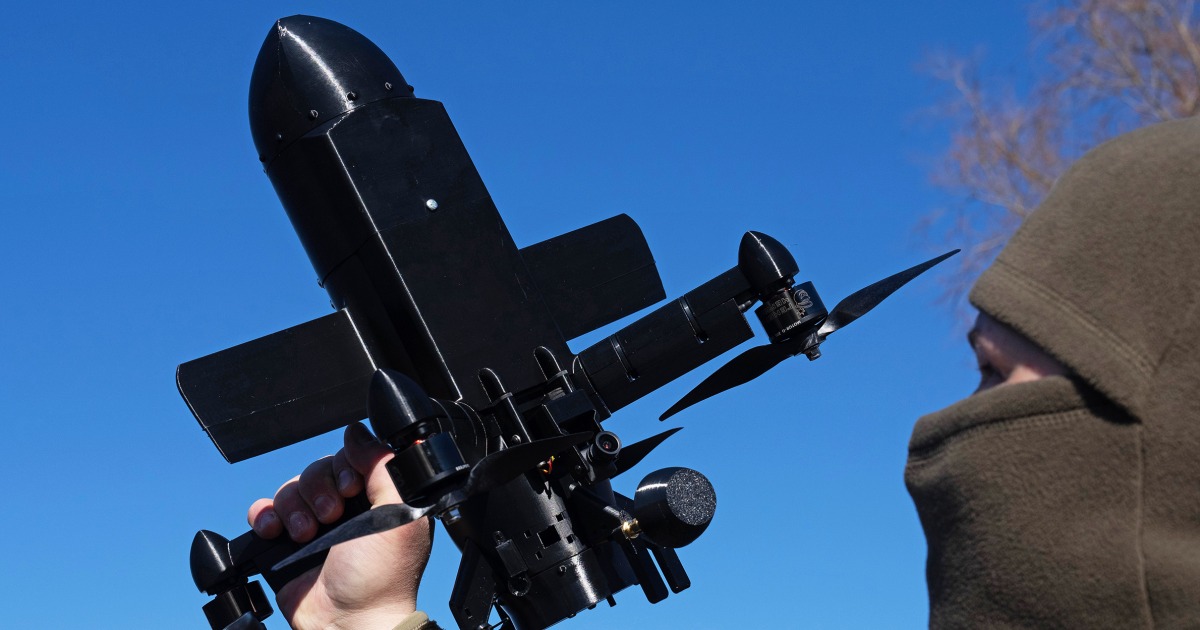
But Tehran still has a large arsenal of ballistic missiles, cruise missiles and drones, and could try to retaliate with strikes across the Persian Gulf in an attempt to sow economic instability and demoralize US allies such as Saudi Arabia, Qatar and the United Arab Emirates.
Iran can measure its response according to the scale of the US attack and intensify its actions if the leaders perceive a US coup attempt, said Joseph Costa of the Atlantic Council, a think tank based in Washington, DC.
“Iran may be calculating that it has to increase the cost of the war,” said Costa, who helped oversee war planning as a senior official at the Department of Defense during the Biden administration.
Last month, some Arab state leaders privately expressed concern to administration officials about Trump’s strike on Iran at the time because they weren’t sure their countries were ready to respond to any Iranian retaliation, NBC News reported. In recent days, however, those leaders have been assured that the US will ensure that it is protected from any retaliation from Iran, according to three Middle East diplomats.
On Monday, Trump criticized reports that the chairman of the Joint Chiefs of Staff, Dan Caine, has expressed concern about not having enough air defense weapons in the region to respond to a retaliatory attack from Iran.
“General Caine, like the rest of us, would prefer not to see a war but, if a decision is made to deal with Iran on a military level, it is his opinion that it will be an easy win,” Trump said on Truth Social, his social media site. “I’m the one who makes the decision, I’d rather have a Deal than not but, if we don’t make a Deal, it will be a very bad day for that country and, more sadly, its people, because they are great and wonderful, and something like this shouldn’t have happened to them.
The US has strengthened air defenses in the region, including in Qatar and Saudi Arabia, to help mitigate the impact of any retaliatory strikes from Iran, according to two people familiar with the matter. They said a number of naval forces patrolling the region, including the aircraft carrier Abraham Lincoln and the aircraft carrier Ford, which are expected to arrive in the coming days, are contributing not only to the offensive but also to the defense forces in the region if the US attacks and Iran responds.
The US also has several squadrons of jet fighters and other military equipment deployed in the region.
The unplanned US strikes, which could be in coordination with the Israeli military, would pose a serious threat to the more than 30,000 US troops in the region, former US officials, foreign diplomats and regional analysts said. And they say protecting those soldiers could be a permanent problem in the region for weeks or months.
More than 35,000 employees are stationed in and around the Middle East, in large bases spread across Qatar, Saudi Arabia, Jordan, Kuwait and elsewhere. Most of those service members are accompanied by their families on those deployments, including the Navy’s Fifth Fleet in Bahrain.
For now, however, a major military build-up in the region would greatly dampen any Iranian retaliation, said Mark Cancian, senior adviser at the Center for Strategic and International Studies in Washington. Last month, when anti-government protests swept across Iran and Trump threatened to intervene, the US had enough military power in the region to launch a punitive strike but not enough to adequately protect allies and partners, he said. Now, he said, it appears that the US has that capability.
Hossein Kanani, a former head of Iran’s Islamic Revolutionary Guard Corps, told NBC News that if the US attacks, Iran will target US bases in the region overseen by the US Central Command, including Qatar, Kuwait, the United Arab Emirates and Bahrain. He also said that Tehran may follow the deployment of European troops elsewhere if those countries participate in the campaign against Iran, although no European country has indicated that it would join the US in any military operation in Iran.
“As you know, we don’t like to have a conflict between Arab countries and Iran,” Kanani said in a video call from Tehran. “We are only attacking the bases of the United States and Israel. And European countries, maybe NATO.”
Iran’s UN mission in New York did not respond to a request for comment.
Iran has three ways to retaliate against the US and, possibly, its allies, experts say. They said its leadership can use missiles; proxy attacks, including targeting Hamas, Hezbollah or the Houthis, for example; or terrorist attacks around the world.
“The American military in the theater provides a lot of protection against missile and proxy attacks, although there is no complete protection,” said Cancian, adding that if Iran attacks terrorists somewhere outside the region, it would probably be an attack on civilians that could cause a lot of anger around the world.
After the June airstrike in Iran, German and Danish authorities discovered a plot linked to Iran against Jewish institutions and Jewish people in Germany. Israel issued a warning about a possible Iranian attack on the United Arab Emirates, and American officials issued a terror advisory warning about possible Iranian plans on American soil.
“There is risk in all of this. None of this is safe,” said Votel, a retired general.