Eurovision, the glittering contest where music meets politics, adds an Asian program

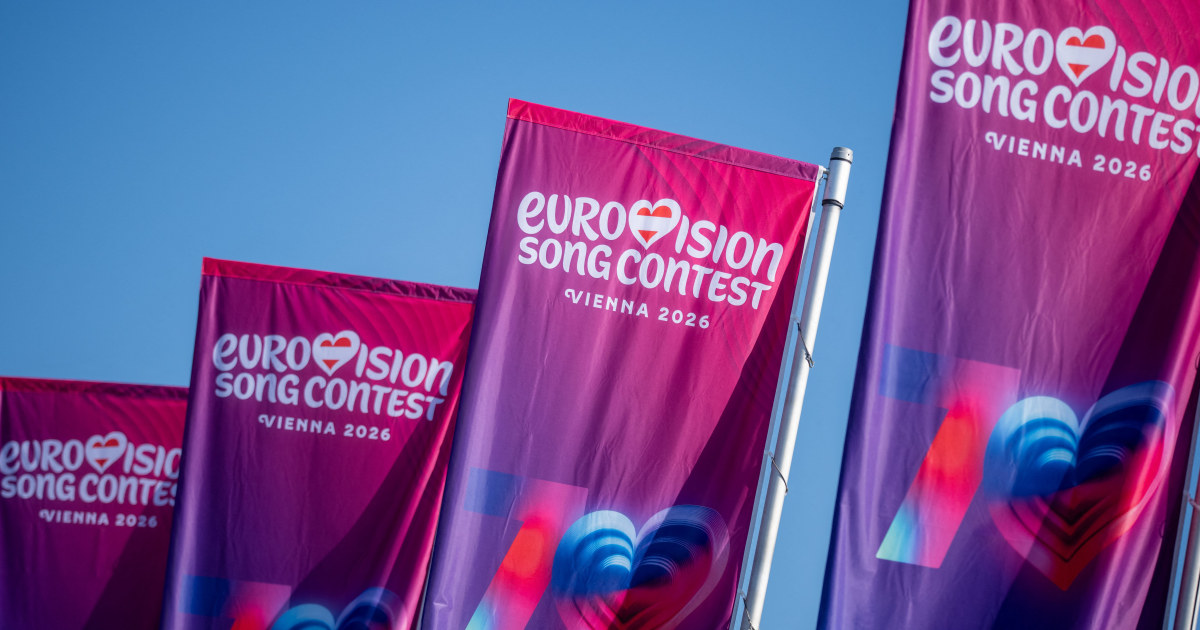
Put away the sequins and put on the pyrotechnics: the Eurovision Song Contest is coming to Asia.
Organizers of Eurovision, the song contest that draws Super Bowl-like audiences every year in Europe and beyond, said on Tuesday that they will hold the first-ever Eurovision Song Contest Asia in Bangkok on November 14.
Music industry heavyweight South Korea is among the 10 countries that will be competing, along with Bangladesh, Bhutan, Cambodia, Laos, Malaysia, Nepal, Philippines, Vietnam and the host country of the games, Thailand. Organizers said other countries are expected to join in the coming months.
Rules for the new competition have not yet been announced. In the Eurovision Song Contest, the broadcaster in each country chooses a singer to sing an original song, no longer than three minutes, to perform live on stage. Performers who have had successful careers after performing at Eurovision include ABBA, Céline Dion and Olivia Newton-John.
“As we mark the 70th anniversary of the Eurovision Song Contest, it feels particularly meaningful to open this next chapter with Asia, a region rich in culture, art and talent,” said Martin Green, director of the Eurovision Song Contest, in a press release announcing the new event.
00:43
Austria won the grand finale of the Eurovision Song Contest
00:0000:00
In recent years, Eurovision has been dogged by national conflicts overshadowing the singing, with Russia being kicked out of the contest after its all-out invasion of Ukraine and Israel facing calls to be banned from the contest and to boycott its war in Gaza. Armenia and Azerbaijan both compete in the tournament while locked in a decades-long conflict over the Nagorno-Karabakh region.
And although regional powers China and Japan have not participated so far, there is a chance that geopolitics will emerge from the Asian competition, as their European counterparts do. Thailand and Cambodia have a border dispute where tensions have flared recently, and several countries have competing territorial claims in the South China Sea.
The idea of an Asian Eurovision show has been floated since at least 2008, but has never been able to get off the ground. Organizers said the event could attract an audience of more than 600 million people, more than three times the 166 million who tuned in to the last Eurovision, according to figures from the European Broadcasting Union, which organizes the contest. But starting a new television culture can be challenging at a time when more media is consumed digitally than ever before.
Last year, Russia tried to revive the Soviet alternative to Eurovision, the Intervision Song Contest. It is unclear how many people watched Vietnam’s Duc Phuc win that tournament, but organizers say they will hold the 2026 Intervision in Riyadh, Saudi Arabia, in September.
Eurovision has tried to expand beyond its main competition before. In 2022, the American Song Contest aired on NBC with all 50 states and several US territories competing, but was not renewed for the following year. Its winner, AleXa, a K-pop singer from Oklahoma, went on to compete in the selection process to become Sweden’s entrant for this year’s Eurovision, although she failed in the end.