Conglomerates are responsible for the high cost of operations during the war in the Middle East

Top Philippine conglomerates are showing a shift in strategy, facing high operating costs amid the Middle East war and ongoing supply chain instability, as they remain optimistic about long-term growth.
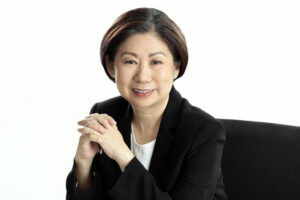
“At the moment, with all this conflict in the Middle East, I think there is probably still a lot of fear for all of us. But having said that, I think that the lights go on, the business goes on, the capex (capital expenditure) goes on. Yes, there are many risks, and maybe the thing that will be higher is the opex (operating costs). So, these costs of our business should reduce a little bit, to reduce short-term costs, or make our business more efficient, or do our work temporary successful. It’s disrupted,” said the Vice Chairman of SM Investments Corp. Teresita T. Sy-Coson during a panel discussion at the InvestPH conference of the Philippine Stock Exchange on March 17.
He also expressed that he hopes that the current instability will be temporary, saying that many businessmen are still hopeful.
“I’d like to think it’s temporary, and from what I see in this survey, I think most of us hope it won’t last long.” And I think we need prayers for that,” he added.
Jaime Augusto Zobel de Ayala, chairman of Ayala Corp., said that the current situation serves as a reminder of how “united” the world economy is, regardless of the ways in which it is divided.
“It is a reminder to all of us that as a business community, a community of countries, I think we all have to take another step to continue building good relations with each other from an economic and political point of view…
He added that this connection is very important in the domestic market. “Not a day goes by—even in my area—when we in our group don’t understand that all our businesses are really connected. We all have to make that effort.”
Speaking about the situation of the current crisis, he said that his main concern is the availability of material resources rather than the fluctuation of costs.
“My concern is a little volatility in the price of what’s happening in the energy sector. I think that’s the reality of the world we’re dealing with. My concern is the end of supply… If we go back to what happened in the 70s, which was the end of the supply of a large system, that would have a big impact on all of us.”
To navigate these risks, he called for a two-track management style that addresses supply threats immediately while protecting future commitments. “When you have such a critical situation, you have two frames of mind. One is the current crisis mentality and the other is long-term … we cannot escape the fact that we need a short-term plan to handle it. And I think we are all facing a situation where we have to make our brains work in those two areas,” he said.
Francisco C. Sebastian, chairman of GT Capital Holdings, Inc., noted that the financial system remains strong, characterized by strong earnings, healthy cash flow, and strong bank capital. He highly praised the role of national regulators in maintaining this stability.
“I think the banks are very healthy because of our BSP (Bangkok Sentral ng Pilipinas) and financial regulators to begin with. Our financial system is strong and over the years we have built income and cash flow that allows us to be strong… Our banks, I think there are no complaints here, we are doing very well. Good deposit funds with good income, good returns and good dividends too,” he said.
Mr. Sebastian added that the group’s main businesses are in a good position to face the challenges of the country’s economic development.
“We’ve been the sole beneficiaries of these figures. Toyota has benefited from rising revenue and demographics… I think I will [not] forget that EV cars will also benefit current drivers,” he said. – AGCMagno