Iran arrests protesters, revolutionaries to quell opposition after deadly crackdown

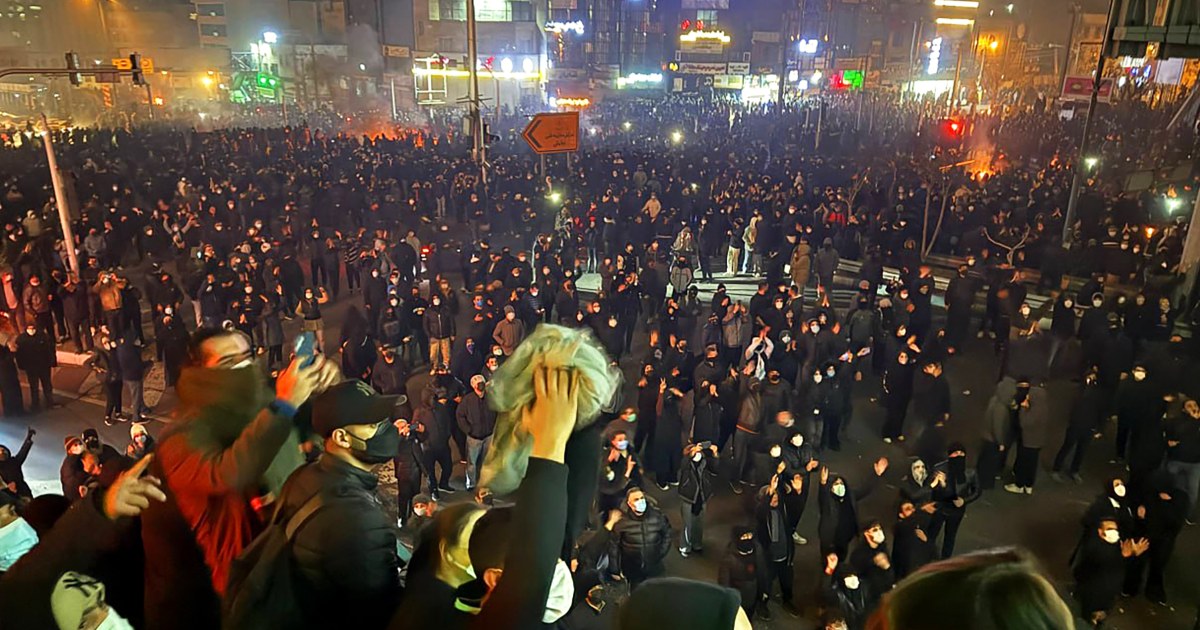
After a brutal crackdown on anti-government protests that left thousands dead, Iranian authorities are taking the next step to quell dissent: mass arrests.
Tens of thousands of people were arrested during the ongoing unrest across the country, and security forces are still searching for people they believe attended protests calling for the end of theocratic rule, according to human rights monitors. But in recent weeks, the administration has also targeted certain groups considered threats to the government, including reformist politicians, doctors, lawyers and journalists, rights groups said.
Their arrests did not end anti-government sentiment: Protests have broken out at many universities in recent days, according to media reports and videos circulating on social media.
“All they have left are guns, prisons and transitional courts. Killing and imprisoning people and this way they stay in power,” said Hossein Raeesi, a prominent human rights lawyer who worked in Iran for 20 years and is now a professor at Carleton University in Ottawa.
President Donald Trump said on Tuesday in his State of the Union address that Iran had killed at least 32,000 protesters.
“They shot them and hanged them,” he said. “We stopped them from hanging a lot of them, they were threatened with severe violence. But these are bad people.”
The US-based Human Rights Activists News Agency (HRANA) put the death toll from the protests at more than 7,000 since Monday, with nearly 12,000 cases “still under review.”
The group says it verifies each death with a network of activists on the ground in Iran and that its data goes through “multiple internal checks.”
The US is building a large number of troops in the Middle East, and Trump is not ruling out an attack on Iran as the two countries hold nuclear talks.
Another round of talks was underway on Thursday in Geneva, with Iran warning of a significant response to even a limited attack.
But while this regime is trying to contain that external danger, it seems to be removing the internal threat that seems to exist.
More than 53,000 people have been arrested since the protests began, HRANA said in its report on Monday. The head of Iran’s judiciary, hardline cleric Gholamhossein Mohseni Ejehi, called the protesters “terrorists” and called for swift punishments.
Among the reformists swept away are Azar Mansouri, head of the Reformist Front coalition; Javad Emam, spokesman for the reformist party; and Ebrahim Asgharzadeh, the 1979 US Embassy hostage-taker in Tehran who turned critic of the regime, according to the Iranian Students’ News Agency.
The arrest may also be a message to President Masoud Pezeshkian, who is close to the reformists and who initially said he would hold talks with the protesters, analysts said. Mansouri, Asgharzadeh and Emam were all released on bail two weeks ago, according to the student news agency.

“The revolutionaries themselves – who have lost popular trust – are no longer a real threat,” said Ali Vaez, director of the Iran project at the International Crisis Group, in an emailed response to questions. “It is any structure, any network, any embryonic ability to organize that the state really fears.”
The number of arrests is so high that thousands of people spend at least half of their time in “black zones,” off-the-grid locations such as warehouses, truck containers and warehouses, according to Esfandiar Aban, director of research at the Center for Human Rights in Iran, a New York-based advocacy group.
Prisoners in black box facilities, some of whom are seriously injured, do not receive medical care, do not have access to proper toilets and are not included in official records, raising the possibility of torture or even death, Aban said.
“We receive many messages from people saying: ‘This is my child’s name. “The pressure on the family is heavy, you don’t know whether he is dead or alive.”
Some detainees are tortured to obtain information from other protesters or to obtain confessions, often admitting to collaborating with foreign governments, which are often televised, according to Aban, who has covered more than 300 cases for the country’s media since the protests began.
Parents of some of the arrested protesters have also been pressured to help plead guilty, said Moein Khazaeli, a lawyer and human rights researcher with Dadban, a group of Iranian lawyers based outside the country that provides online legal advice and monitors the wave of arrests.
“They will say, for example, go and tell your son to plead guilty and we will help him, otherwise his sentence will be a conviction, or his sentence is 20 years in prison, or we will not release him soon,” said Khazaeli, noting that other family members were also threatened with arrest.
He continued, “Sometimes they arrest the prisoner’s father and take him to prison and bring the arrested boy to show him and say, ‘Look, we have your father, sit down and confess to the crime.'”
Many lawyers have been barred from entering the cases, said Raeesi, a human rights lawyer based in Canada. Others who have offered pro bono work on social media or represented protesters in past riots have been arrested, he said.
Doctors and other health workers have also been arrested for providing medical care to protesters, according to human rights groups.
“The government has used different tactics to expel doctors who oppose the presence of security forces or treat patients,” said Homa Fathi, a Canadian-based activist and member of the International Independent Physicians and Healthcare Providers Association, who has been in contact with medical professionals in Iran and has written about the arrests.
“They just wanted people to die. It’s not that complicated. They just wanted to kill people. And when you treat people, you stop them in their tracks. Unfortunately, you’re cruel and it’s as simple as that.”

Human rights organizations have documented the torture of detainees.
“Authorities have subjected detainees to torture and other abuses. Those detained are at high risk of death in custody, unfair trials, and secret executions, summary, and arbitrary convictions,” Human Rights Watch said in a report on Tuesday.
Torture and ill-treatment have included “severe beatings with sticks; kicking and punching; sexual and gender-based violence; deprivation of food; and psychological torture, such as death threats, and denial of medical aid to the injured,” the group said.
It is unlikely that the government will stop the arrests any time soon, say observers.
“The regime wields terror as its main tool, hoping to scare a weary nation into political limbo,” said Vaez, of the International Crisis Group. “But fear is a powerful tool against people who have lost patience and, increasingly, fear the consequences.”