Judge blocks Trump DOJ from reviewing information obtained by Washington Post reporter

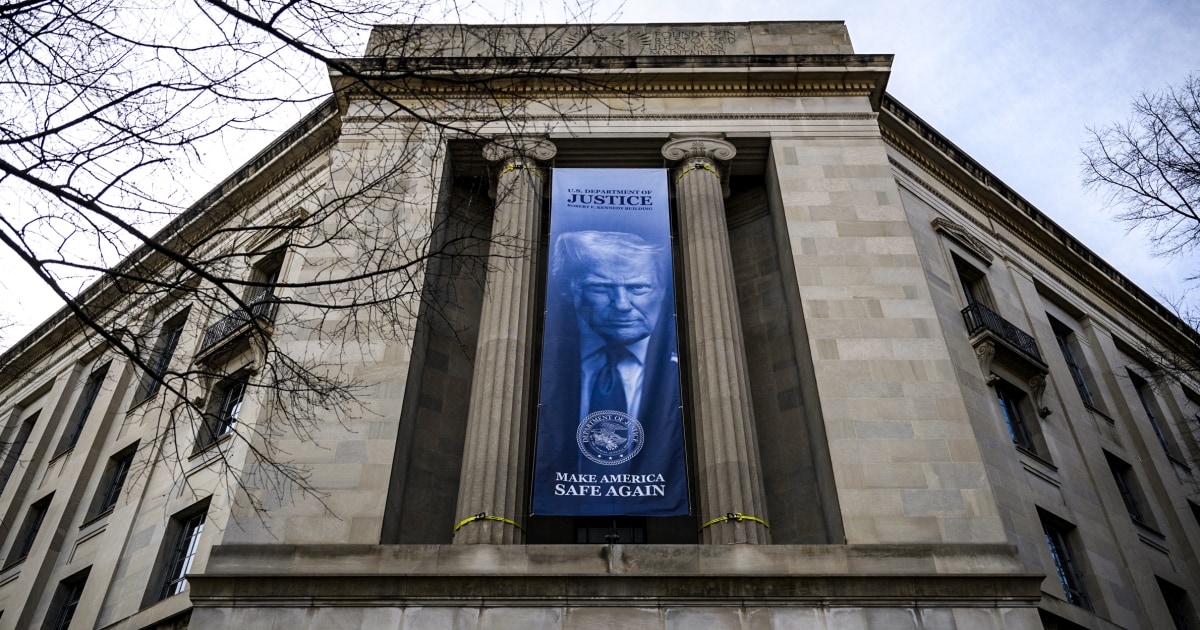
A magistrate judge on Tuesday revoked the Trump administration’s ability to examine information obtained by Washington Post reporter Hannah Natanson last month, saying he would “conduct an independent review” of the materials obtained by the Justice Department through the use of a search warrant.
US Magistrate William B. Porter wrote that the “real hope” of the court is that the investigation was carried out, as the Trump administration argued, “to gather evidence of a crime in a single case, not to gather information about confidential sources from a journalist who published articles critical of the administration.” Porter wrote that he is “hopeful that the record will bear out the government’s representations.”
The Washington Post called the seizure of the materials last month “outrageous,” saying the government’s decision to seize the materials despite a search warrant issued at Natanson’s home “stuns speech, cripples reporting, and causes irreparable damage every day the government keeps its hands on these things.”
On Tuesday, the newspaper responded to the ruling in a statement, “We applaud the court’s recognition of the fundamental protections of the First Amendment and its rejection of the government’s arguments to expand the search of Hannah Natanson’s tools and equipment in their entirety and to monitor them to determine their relevance.”
The Justice Department did not immediately respond to a request for comment.
Porter authorized a search warrant in connection with the investigation of Navy veteran Aurelio Perez-Lugones, who was indicted last month on charges of illegally withholding defense information.
In his ruling Tuesday, Porter expressed frustration that the government was not forthcoming about the Privacy Protection Act of 1980, a federal law that prohibits the government from seeking or seizing any work product of journalists.
Porter wrote that he was “unaware” of that rule when he conducted the limited reason review, and accepted responsibility for the “gap” in his analysis. But he said the government’s “failure” to uphold the law “severely undermines the Court’s confidence in the government’s disclosures in these proceedings.”
Porter wrote many federal lawyers — including those “from the highest levels of the DOJ” — had the opportunity to flag the law as part of their argument.
“None of them did that,” Porter wrote. “In its daily practice, this Court gives federal attorneys the impression that they do, including assuming that federal prosecutors have satisfied their duty to disclose regulatory authority. The government’s conduct has violated that standard of respect.”
At last week’s hearing, Porter said the search warrant authorization went up to Attorney General Pam Bondi and questioned Justice Department attorneys about the failure to cite the law when filing the search warrant application.
“You didn’t know or you didn’t tell me?” Porter asked.
Porter said he was “disappointed” by the government’s failure to pass the law. “I find it hard to believe that this law does not work,” he said.
Still, Porter wrote Tuesday, he couldn’t “simply order the government to turn over all the devices” and allow the Washington Post to independently identify the items responsive to the search warrant. He said an external review was needed to identify and protect classified information before the equipment could be returned.
Porter wrote Tuesday that Natanson’s career has been changed by the confiscation of his equipment, and that the Justice Department’s suggestion that Natanson “start over fails to recognize the realities of modern journalism and the value of secret relationships cultivated over time.”
Porter concluded that Nathanson’s rights were “barred” because the government “seized the entire product of Ms.
Porter concluded that in weighing “First Amendment rights and newsgathering rights against the government’s compelling interest in his prosecution,” “it was reasonable for the government to retain only the limited information relevant to the search warrant — nothing more.”
A status conference in the case is scheduled for March 4.